
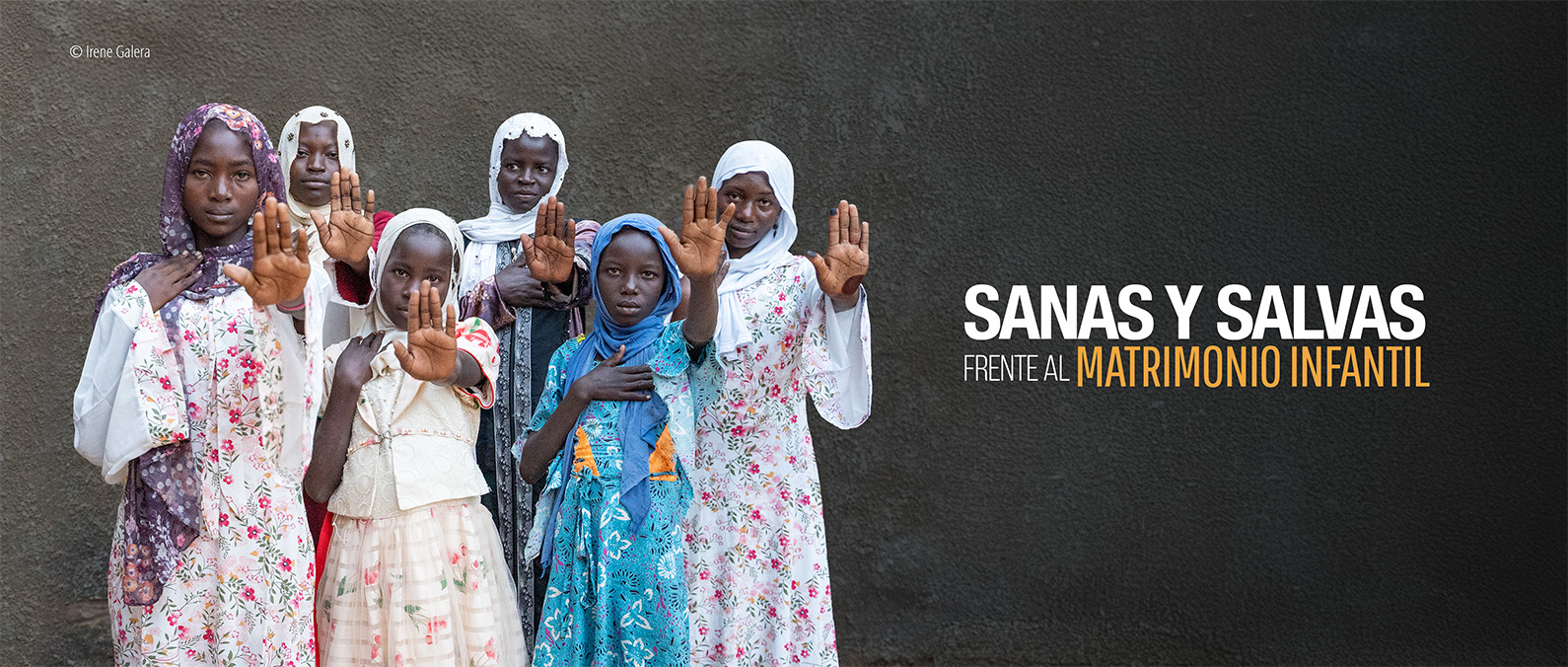
Every year, 12 million girls are forced
into marriage before the age of 18.
Every three seconds, somewhere in the world, a girl has her childhood, her education, and her dreams taken away by forced marriage.
Child forced marriage is one of the most widespread yet least visible forms of violence against girls:
- It reinforces poverty and gender inequality
- It takes away their childhood, education, and future
- It increases the risk of early pregnancies and health issues
- It exposes them to sexual violence and economic dependence
Why is an International Day for the Elimination of Child and Forced Marriage so important?
The UN has announced the creation of an International Day for the Elimination of Child, Early, and Forced Marriage, which will be observed on November 27.
At Entreculturas, we welcome this decision, as this international day will serve to:
- Bring together the voices of governments, civil society, and, above all, girls themselves
- Elevate the issue on the global political agenda
- Hold States accountable
- Mobilize resources and strengthen commitments
Girl’s voices
“I want to study, not get married.”
Indigenous girl from Guatemala
“They prepare me for marriage, not for learning.”
Girl from South Sudan
“When girls reach sixth grade,
we stop seeing them.”
Teacher from Chad
Girls’s own testimonies make it clear:
education, protection, and freedom
are the real alternatives to child forced marriage.

If you want more information,
you can download the report
The LIGHT of GIRLS against child forced marriage
Since 2012, The LIGHT of GIRLS, together with Fe y Alegría and JRS, has supported more than 70,000 girls in 20 countries in Africa and Latin America so they can grow up free from violence, go to school, and decide their future.
Our work focuses on:
- Prevention: We promote education and raise awareness in communities to tackle gender inequality.
- Protection: We create safe environments and provide alternatives for girls at risk of early marriage or violence
- Participation: We support girls so they can make their voices heard and be recognized as right holders.
Together with governments, communities, and organizations, we promote policies and foster social and cultural change to challenge stereotypes and end child marriage. Even in the most adverse contexts, when education, support, and opportunities are guaranteed, girls can break this cycle and build a future of freedom.

